
Nuclear power has become a hot topic, with President Trump, the tech industry, and even some climate activists pushing for a new ‘nuclear renaissance.’ Yet the role of industry interests in this push has gone largely unrecognized – until now. Glowing Reviews, Committee to Bridge the Gap’s major new report, pulls back the curtain on the network of donors, advocates, investors, and industry leaders that, since 2014, has run a sophisticated, well-funded campaign to change public perceptions and government policies on nuclear power. As the Trump administration enacts a historic slashing of nuclear safety regulations and delivers many billions of taxpayer dollars to the nuclear industry, understanding how we got here is critical to choosing where we go next.
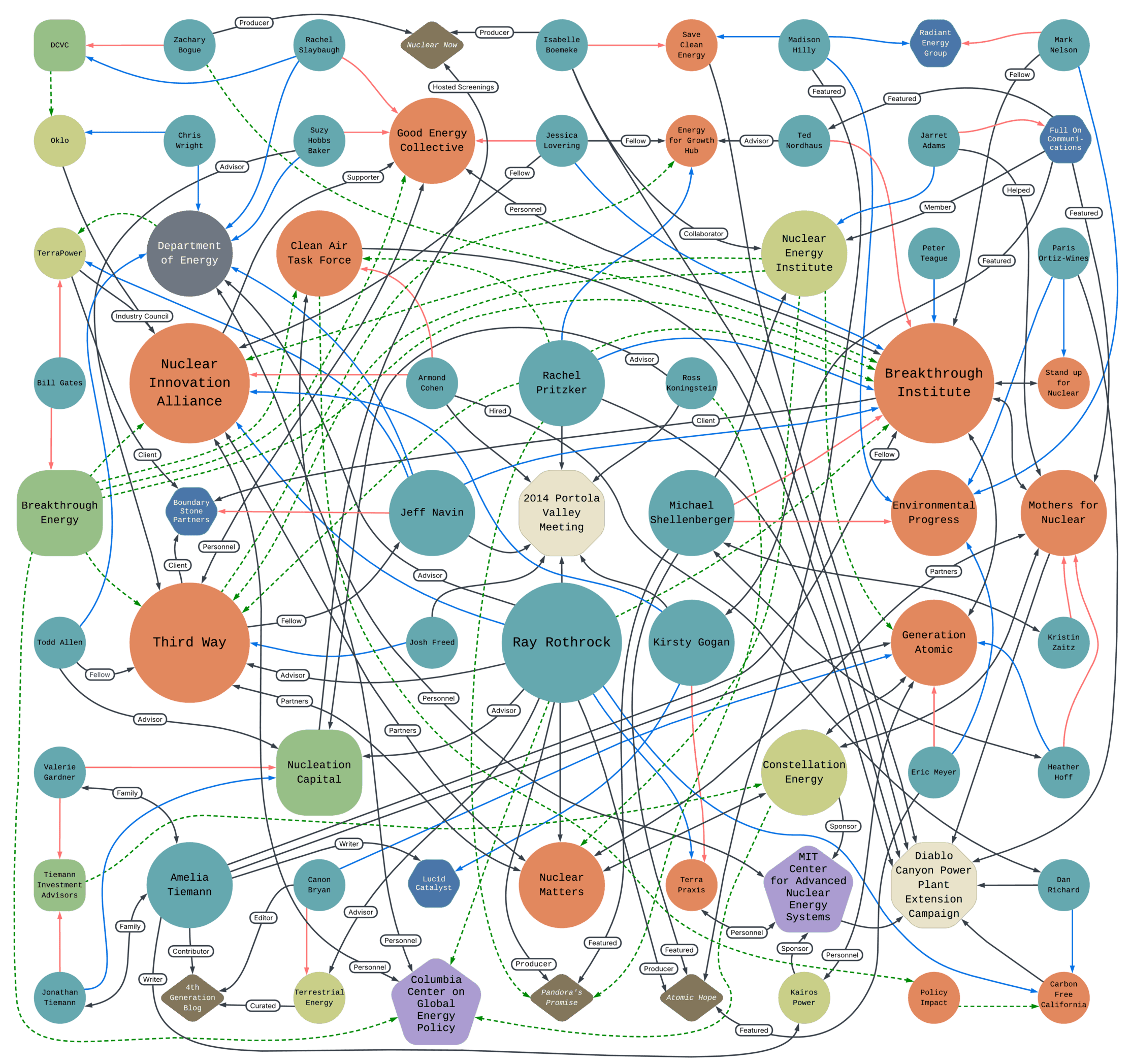
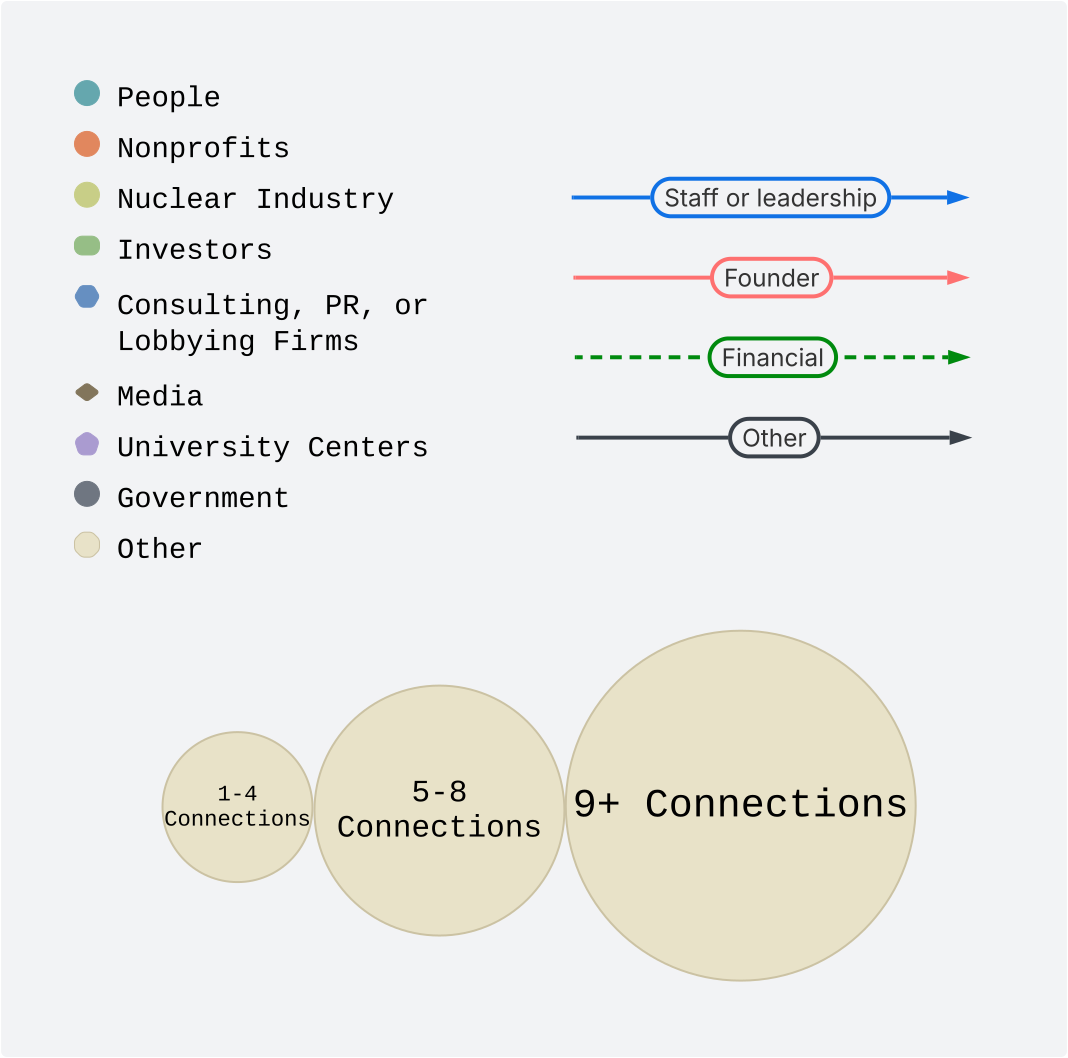
Pro-Nuclear Network Map

Watch the report presentation from the media release event:
In recent years, nuclear power has emerged in the national conversation as an apparent solution to a range of energy woes, from climate-related efforts to decarbonize the grid to meeting the projected energy demands of AI data centers. Public attitudes toward nuclear power have shifted markedly, with recent polls showing higher percentages of U.S. adults in support. U.S. government regulation of and funding for nuclear energy has also shifted dramatically: starting in the first Trump administration and expanding every year since, a slew of bills and executive orders have removed many of the regulatory hurdles faced by nuclear reactor developers, and provided the industry with many billions of dollars in subsidies.
Updates
Released Today: Major CBG Report
Problems with Trump’s Nuclear Renaissance Plans
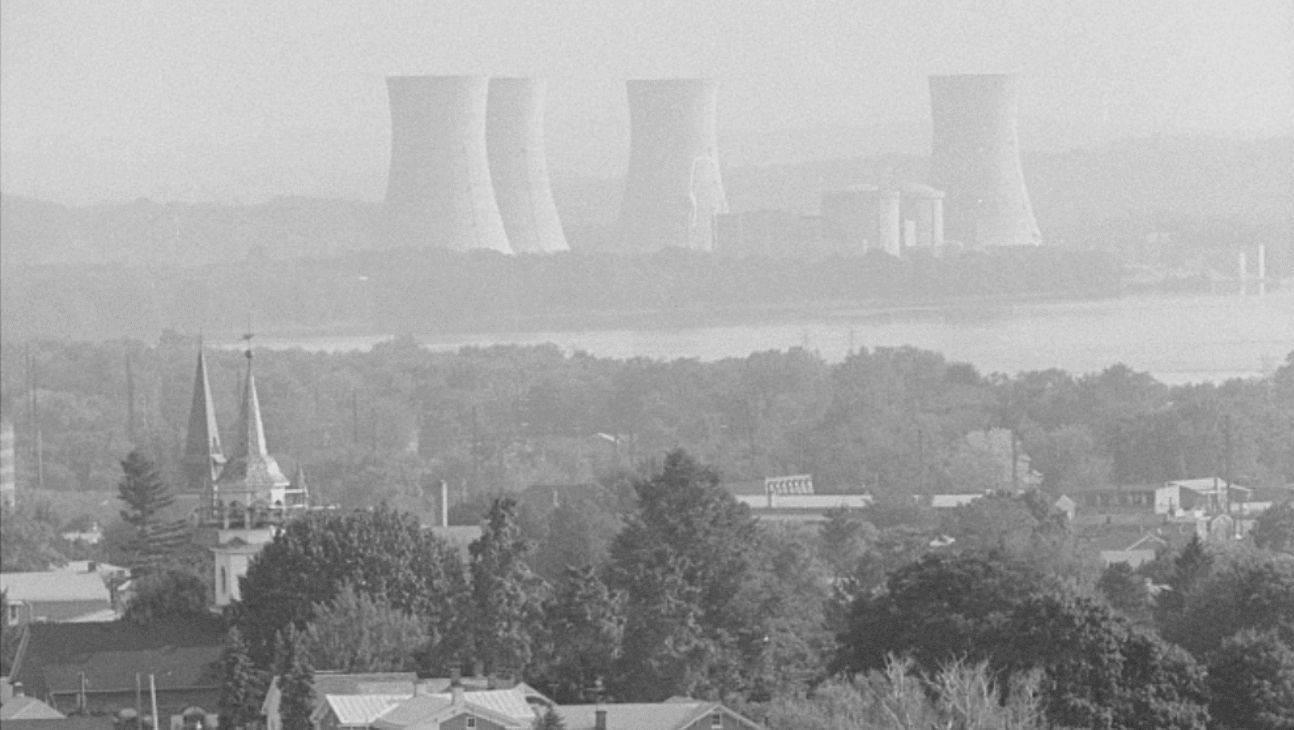
Harper’s Magazine Reports on the Risky Resurgence of Nuclear Power
Much of this apparent groundswell of support for nuclear energy can be traced back to what we call the pro-nuclear network (PNN): a relatively small, interconnected cluster of people and organizations with influence, wealth, and nuclear industry ties who have played a singular role in jump-starting this surge. Beginning at a pivotal 2014 meeting in Silicon Valley, the PNN has driven a sophisticated, well-funded campaign to shift public perception and policy, consistently highlighting the benefits of nuclear energy while dismissing concerns about its hazards. The PNN is no fringe group but an influential cohort placed well within the mainstream of energy discourse whose policy papers and spokespeople make frequent appearances in The New York Times, The Economist, and other such prestige outlets.
The nuclear industry is woven extensively into contemporary efforts to promote nuclear energy, single-handedly standing up some “grassroots” advocacy groups and providing substantial funding for others. Pro-nuclear advocates often present their activities as being independent of industry influence, even when such claims are misleading or outright false. Groups and individuals involved in the PNN have collaborated with and received funding from the nuclear industry and nuclear energy investors, money that has enabled the PNN to enlist the support of public relations firms, lobbyists, and academic bodies in engineering industrial-grade public persuasion.
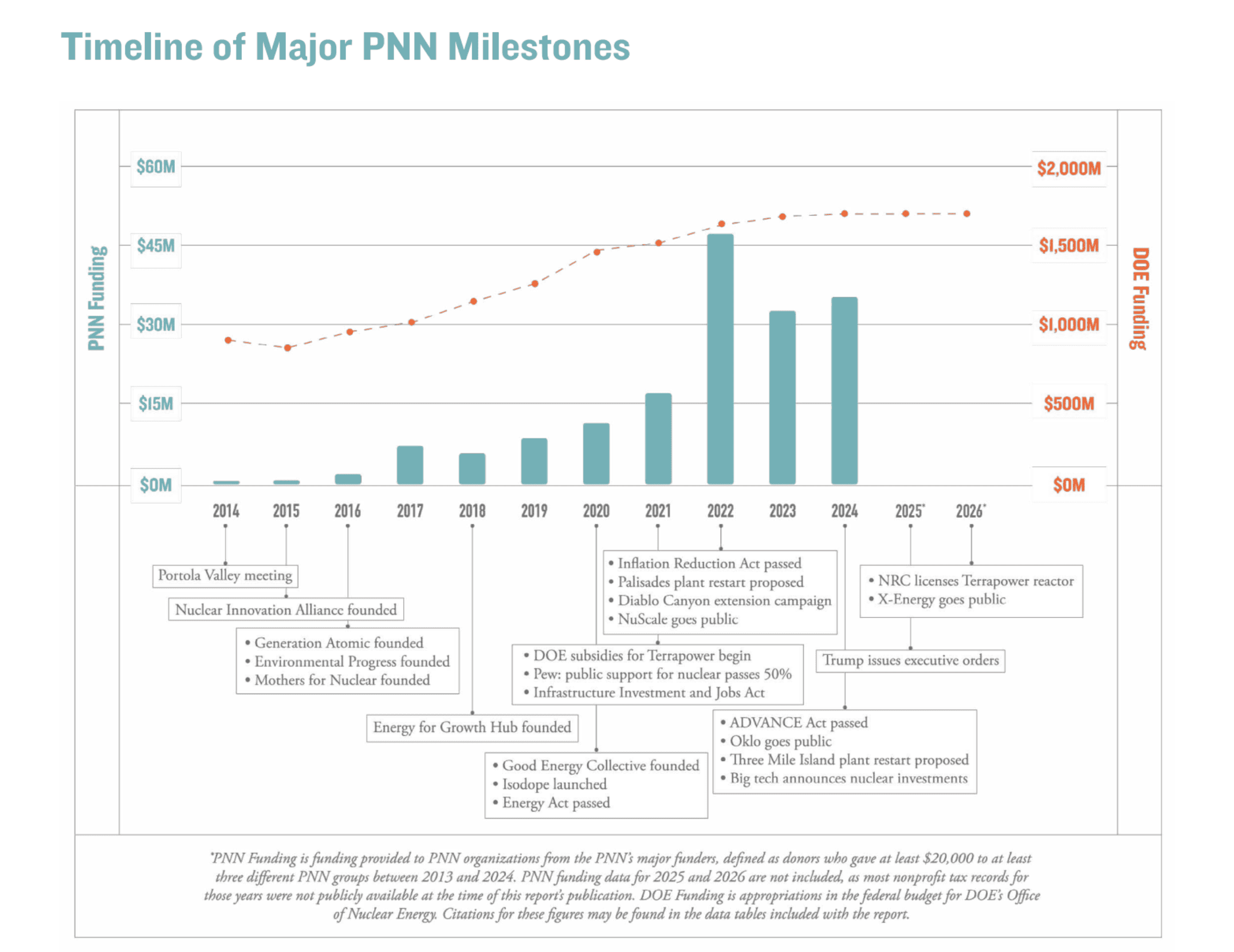
The PNN is supported not only by established nuclear interests, but also by prospective ones: investors. Investment in nuclear energy is booming. Venture capital investment into nuclear energy hovered around a mere $15 million annually between 2015 and 2017, until it began taking off in 2018 and surpassed $1 billion in 2022. By 2025, over $1 billion was invested into nuclear startups in just a single five week period. Billionaires Bill Gates, Peter Thiel, and Marc Andreessen each have large holdings in nuclear companies; each is also involved, to some degree, in efforts to influence public and government support for nuclear power. The PNN can perhaps best be understood as another arena in which the extremely wealthy wield their considerable influence to shape the world for their private benefit.